Download Ebook Valley of the Gods: A Silicon Valley Story, by Alexandra Wolfe
This is some of the benefits to take when being the participant and also get the book Valley Of The Gods: A Silicon Valley Story, By Alexandra Wolfe right here. Still ask what's different of the other site? We supply the hundreds titles that are created by advised authors as well as publishers, worldwide. The connect to get and also download Valley Of The Gods: A Silicon Valley Story, By Alexandra Wolfe is additionally extremely simple. You could not discover the difficult website that order to do even more. So, the means for you to get this Valley Of The Gods: A Silicon Valley Story, By Alexandra Wolfe will be so easy, won't you?
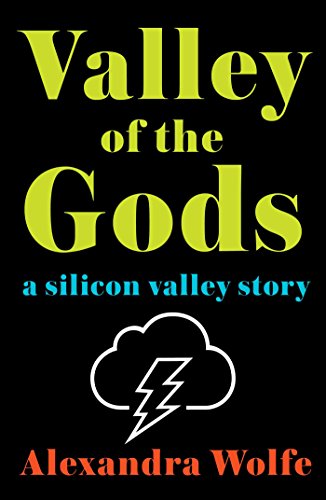
Valley of the Gods: A Silicon Valley Story, by Alexandra Wolfe

Download Ebook Valley of the Gods: A Silicon Valley Story, by Alexandra Wolfe
Valley Of The Gods: A Silicon Valley Story, By Alexandra Wolfe. It is the moment to boost and refresh your skill, understanding as well as experience included some amusement for you after very long time with monotone things. Working in the office, visiting examine, gaining from test as well as more activities might be completed and you have to start new things. If you really feel so worn down, why do not you attempt brand-new thing? A quite easy point? Checking out Valley Of The Gods: A Silicon Valley Story, By Alexandra Wolfe is exactly what our company offer to you will understand. And the book with the title Valley Of The Gods: A Silicon Valley Story, By Alexandra Wolfe is the reference currently.
By reading Valley Of The Gods: A Silicon Valley Story, By Alexandra Wolfe, you could know the understanding and things even more, not only concerning what you receive from people to people. Schedule Valley Of The Gods: A Silicon Valley Story, By Alexandra Wolfe will be more relied on. As this Valley Of The Gods: A Silicon Valley Story, By Alexandra Wolfe, it will truly provide you the great idea to be effective. It is not just for you to be success in certain life; you can be successful in everything. The success can be begun by knowing the standard knowledge as well as do activities.
From the combination of understanding and activities, a person can improve their skill and capacity. It will lead them to live as well as work much better. This is why, the students, workers, or even employers ought to have reading behavior for books. Any kind of publication Valley Of The Gods: A Silicon Valley Story, By Alexandra Wolfe will provide particular understanding to take all benefits. This is exactly what this Valley Of The Gods: A Silicon Valley Story, By Alexandra Wolfe informs you. It will include even more knowledge of you to life and work much better. Valley Of The Gods: A Silicon Valley Story, By Alexandra Wolfe, Try it and prove it.
Based on some experiences of lots of people, it is in truth that reading this Valley Of The Gods: A Silicon Valley Story, By Alexandra Wolfe can help them making much better choice and give even more encounter. If you intend to be one of them, allow's purchase this book Valley Of The Gods: A Silicon Valley Story, By Alexandra Wolfe by downloading guide on web link download in this site. You could get the soft data of this book Valley Of The Gods: A Silicon Valley Story, By Alexandra Wolfe to download and put aside in your offered digital devices. What are you awaiting? Let get this publication Valley Of The Gods: A Silicon Valley Story, By Alexandra Wolfe on the internet and review them in whenever as well as any sort of location you will read. It will not encumber you to bring heavy book Valley Of The Gods: A Silicon Valley Story, By Alexandra Wolfe within your bag.
In a riveting, hilarious account, reporter Alexandra Wolfe exposes a world that is not flat but bubbling—the men and women of Silicon Valley, whose hubris and ambition are changing the world.
Each year, young people from around the world go to Silicon Valley to hatch an idea, start a company, strike it rich, and become powerful and famous. In Valley of the Gods, Wolfe follows three of these upstarts who have “stopped out” of college and real life to live and work in Silicon Valley in the hopes of becoming the next Mark Zuckerberg or Elon Musk. No one has yet documented the battle for the brightest kids, kids whose goals are no less than making billions of dollars—and the fight they wage in turn to make it there. They embody an American cultural transformation: A move away from the East Coast hierarchy of Ivy Leagues and country clubs toward the startup life and a new social order.
Meet the billionaires who go to training clubs for thirty-minute “body slams” designed to fit in with the start-up schedule; attend parties where people devour peanut butter-and-jelly sushi rolls; and date and seduce in a romantic culture in which thick glasses, baggy jeans, and a t-shirt is the costume of any sex symbol (and where a jacket and tie symbolize mediocrity). Through Wolfe’s eyes, we discover how they date and marry, how they dress and live, how they plot and dream, and how they have created a business world and an economic order that has made us all devotees of them.
A blistering, brilliant, and hysterical examination of this new ruling class, Valley of the Gods presents tomorrow’s strange new normal where the only outward signs of tech success are laptops and ideas.
- Sales Rank: #94400 in Books
- Brand: Simon Schuster
- Published on: 2017-01-10
- Released on: 2017-01-10
- Original language: English
- Number of items: 1
- Dimensions: 8.37" h x 1.00" w x 5.50" l, .0 pounds
- Binding: Hardcover
- 272 pages
Features
Review
“[Wolfe] explores the particulars of the valley itself, where youth and high-profile failure can be badges of honor, and the concentrations of wealth and intelligence are staggering. With a detached and playful tone, fly-on-the-wall Wolfe catalogs the unique habits, dress, nutrition, and mating habits of the startup class.”—Booklist
�“Racy and fun…. Wolfe's entertaining and intensive look inside this aspirational, transformational, and transgressive lifestyle is both celebration and cautionary tale.”—ELLE
"Wolfe is an entertaining writer....Wolfe lands on characters who are vibrant and open-minded."—The Atlantic
"A fascinating look into the beginning stages of startups."—San Francisco Chronicle
"A jauntily paced anthropological look at Northern California’s techtopia. The Palo Alto semispoof is becoming a crowded genre (Mike Judge’s HBO show, Antonio Garc�a Mart�nez’s memoir Chaos Monkeys, etc.), but Wolfe, a Wall Street Journal reporter and former Bloomberg Businessweek columnist, has found relevant new eyes through which to show outsiders around."—Bloomberg Businessweek
"A sharply observed, often quite funny anthropological deep dive into the strange inner workings of the Bay Area tech world."—VOGUE.com
"Wolfe, a Wall Street Journal columnist and the daughter of author Tom Wolfe, uses the stories of Burnham, Deming, and their peers in Valley of the Gods to chronicle the peculiar and often comical mores of Silicon Valley....Valley poses some weighty questions about the value of a college education and the nobility of joining the modern gold rush in Silicon Valley, but the allure of the book is Wolfe’s shrewd observations about more mundane things like clothes. Her narrative style is less showy than her father’s, but she adopts some of his most effective literary techniques such as providing extensive descriptions of how her subjects dress, eat, exercise, and hook up."—National Book Review
"Alexandra Wolfe's revealing new book, Valley of the Gods, offers a peek inside the privilege, power, and profligacy of Silicon Valley. Wolfe's reporting exposes the inner workings of the multibillion-dollar tech industry and also the odd behavior in which its titans indulge."—Town & Country
"Wolfe delves into a world that few have seen up-close: her book takes place in hallowed businesses that many of us only know by their online presences, and it’s an eye-opening look....If you want a good peek into tech businesses and, possibly, the future, find ‘Valley of the Gods’ and give it a try."—HOUSTON STYLE MAGAZINE
"Captures the absurdity of this brave new world, pierces the hype but also conveys the dreams and the passions that can shape a world's economy."—USA Today
About the Author
Alexandra Wolfe is a staff reporter for The Wall Street Journal and writes the weekly column “Weekend Confidential.” After graduating from Duke University, she worked as a staff reporter for the New York Observer, The Wall Street Journal, and then Cond� Nast Portfolio. As a freelancer, she wrote regular columns for Bloomberg Businessweek, features for Travel + Leisure and Departures, and has written cover stories for Vanity Fair and Town & Country. The Valley of the Gods is her first book. She lives in New York City.
Excerpt. � Reprinted by permission. All rights reserved.
Valley of the Gods
1
Asperger’s Chic
John Burnham wanted to mine asteroids. He had always been a little bit different. Instead of reading school textbooks or his summer reading list, he read Plato, Aristotle, and a modern-day “neoreactionary” thinker who goes by the pen name Mencius Moldbug. A self-declared libertarian and “self-directed learner,” motivated to study on his own, Burnham felt like he didn’t need teachers to tell him what to do. He was a terribly behaved student.
By the spring semester of his senior year of high school in 2011, John had been rejected or wait-listed from all ten colleges he applied to except the University of Massachusetts, just over ten miles away from where he lived in Newton, Massachusetts. He didn’t really care, though, since the idea of enduring another four years of dull lectures and drearier tests was less than appealing. It was a distraction from what he had always wanted to do, which was to go into space—and reap trillions of dollars from the valuable minerals that existed in asteroids.
Burnham wasn’t delusional. He knew what he was talking about. While most of his classmates read Tess of the d’Urbervilles and The Great Gatsby, he was researching nickel, cobalt, and platinum on S-type (silacaceous) asteroids. With bright blue eyes, blond hair, and a seemingly permanent smirk, he was popular with girls and distracted himself with brief high school flirtations, but John still had plenty of time for his loftier interests. As he procrastinated doing the homework assignments he found pointless, he scoured the Web, stumbling across bloggers whose ideas were at least more interesting than those of his current teachers.
His favorite was called Unqualified Reservations, written by the reactionary blogger Mencius Moldbug, whose real name is Curtis Yarvin. An engineer living in Silicon Valley, Yarvin described himself in his blog’s “About Me” section with the words “stubbornness and disrespect.” Burnham was hooked.
One night, when John was up reading Patri Friedman’s blog, he came upon a new posting announcing a call for applications to a fellowship called 20 Under 20. Sponsored by the Thiel Foundation, it offered twenty students under twenty years old $100,000 to drop out of school, forgo college for the duration of the fellowship, and start their own companies. Drop out of school? Burnham didn’t have to be convinced. He wasn’t sure what his mother and father, a Congregationalist minister and a financial investor, respectively, would think of the idea, but he was curious to find out more.
The Thiel Foundation turned out to be the charitable arm of an empire belonging to Peter Thiel, founder and chairman of the Founders Fund, a major Silicon Valley venture capital firm that had invested in companies such as Spotify, the music streaming subscription service, and the ride-sharing service Lyft. Burnham clicked from article to article: from the Forbes magazine piece that described Thiel’s chef and butler to the Fortune article calling him one of best investors in the country.
In 2011 Thiel was a youthful forty-three. He had just announced the fellowship in fall 2010 at a conference called TechCrunch Disrupt. The conference was sponsored by TechCrunch, a website dedicated to news and gossip about the valley, and also served as a tech company directory, listing founders, investors, and financing rounds. At first, Thiel’s announcement was a way to call attention to what he considered the waste of time and money spent on a college education. He also railed against the political correctness he thought universities propagated. By selecting a group of high school students who would otherwise have gone to four-year institutions to start life early, he hoped to prove that the college model was outdated. Burnham was already familiar with some of Thiel’s projects and often outlandish ideas. While he ran his hedge fund, Clarium, or funded Silicon Valley start-ups by day at the Founders Fund, Thiel also had a penchant for pursuing original causes, no matter how crazy they seemed.
One of these was the Seasteading Institute, a project to create a libertarian community at sea, where people could buy a man-made island and govern themselves. The head of the Seasteading Institute was a then thirty-four-year-old former Google engineer named Patri Friedman, grandson of the economist Milton Friedman. Patri’s ideas regularly popped up on Moldbug’s blog, and vice versa. Burnham often read Friedman’s libertarian musings, and when he saw the fellowship advertised on his site as well, the seventeen-year-old knew he had to apply.
The application asked questions such as “What do you believe that no one else does?” Burnham had a ready answer: just about everything. While on the surface he seemed like a typical high school senior, with a cheery demeanor and outgoing personality, it was as though he lived on another plane that hovered over everyone else his age. His mind was up in the sky.
As Burnham saw it, the application wasn’t only an entr�e to Silicon Valley but also a way to reach a farther frontier: space. If anyone could help him get there, it was this Thiel character, with the big ideas, contrarian outlook, and a willingness to back crazy concepts. Winning the fellowship would present a way out of even more years of inculcation of an educational canon that had never made sense to him, as well as a chance to focus full-time on these bigger-picture problems that he would soon hear as a steady refrain throughout Silicon Valley as “changing the world.” John didn’t just want to be a Thiel Fellow. He needed to become one. Otherwise he was going to backpack around Europe instead.
In Silicon Valley, he thought, people might take seriously what his friends and teachers ridiculed back in Boston. There, they too might believe they could live on Mars someday. Out west, in the promised land, they wouldn’t look at him like he was crazy when he talked about the money that could be made from mining asteroids.
So he started writing his answers. Why did we need to go to space? “At the core of the Earth is the most unbelievable mother lode of heavy elements,” he explained. The problem was accessing them. “Dense elements have over the eons sunk into the depths of the Earth.” Burnham had long wanted to figure out a way to dredge up at least some of these. He didn’t understand why no one had done so already.
He thought more about that application’s first question. While most people didn’t think we urgently needed to get to space, most people also believed in a set of basic beliefs that he didn’t. Take democracy, for one. Why, he wondered, did everyone believe in it so blindly? Instead, John thought, democracy was really oligarchy: government by a select few. He’d borrowed this idea from Moldbug’s blog and then looked for the same concept in Plato. “Plato is magnificent,” he said matter-of-factly.
Some of his political views had been informed by reading about the history of the French Revolution and the writings of Edmund Burke, an Irish-born political thinker and member of the British Parliament in the eighteenth century. Burnham grappled with the idea of how monarchy and democracy are similar, about how they are both the rule of the many by the few.
He wondered why none of his friends asked the questions he did and why his teachers were always telling him his interruptions were bothersome. He didn’t think he was all that different from the people he read, only the people he met. Was he too influenced by these blogs, by the opinions of others? he wondered.
The next question was one that Burnham had been thinking about for as long as he could remember: “How would you change the world?”
•�•�•�
He had researched a number of asteroids. He didn’t understand why so many people had been against NASA’s spending more than $224 million on its unmanned mission to the asteroid Eros 433 in 1996, for example, when he felt certain that the platinum and gold floating up in that asteroid would be worth trillions. The spacecraft took four years to reach the solid space rock, then orbited it for another twelve months, gathering essential data.
Why hadn’t technology improved? Why couldn’t a payload of 487 kilograms of spacecraft, sensors, and electronics be stored on Eros 433 for less than hundreds of millions of dollars? he wondered. He had studied every aspect of Eros. The wind there was solar wind. The hill was shallow, and the wind as strong, so why couldn’t they use solar sails to move it? he asked.
Burnham figured the only expensive part would be getting up there. He had heard about Virgin Group founder Richard Branson’s space tourism company Virgin Galactic, but wasn’t particularly excited about it�—and that was before one of their spaceships crashed. He saw it as a vacation for only the wealthy. And the teenager had high hopes for SpaceX, a rocket company founded by Elon Musk, a friend of Thiel’s and a cofounder of PayPal, as well as Blue Origin, a space exploration company funded by Amazon founder Jeff Bezos.
If the government wasn’t doing anything about it, at least these guys were, he figured. But what none of them was doing was developing a robot to mine the asteroids. Burnham wanted to make that happen. “I don’t think this should actually be terribly impossible,” he wrote on his Thiel fellow application. All the robot would have to do was dig.
Burnham figured that the robots would excavate the minerals and then bring them back to Earth to be processed. Eventually they could be processed in space, but he thought it should probably happen on Earth first even though some of the minerals might be destroyed in the process. He had already thought about how to get these chunks of rock from Earth’s orbit to its surface. Maybe foils, parachutes, or balloons could work, he mused. The chunks would have to be small enough to burn up in the atmosphere, and their orbit would have to degrade into the ocean. “I’d hate to cause another Tunguska event over a major city, or even a small town,” he said in his application. “Bad publicity.” He was referring to what happened over Siberia in 1908, when a large asteroid believed to weigh 220 million pounds and traveling 33,500 miles per hour disintegrated five miles up in the sky, setting off an explosion as powerful as the atomic bomb later dropped on Hiroshima, Japan—times 185.
Someone must have considered this idea already, Burnham thought to himself. Maybe at SpaceX? He wanted to meet whoever these people were and be part of this discovery, or perhaps it would be a race, if there were a lot of people working on it. “The first one there becomes the next Standard Oil,” he thought. “In any case, this is the easiest way that I can see to fulfill one of the dreams of the last fifty years of space exploration: to make space profitable.”
But to John, the most exciting part of space was the idea of a new frontier, or “the next frontier,” he said. “Space is big. I bet that it’s big enough so that if a group of people want to create a society that completely contravenes every legal and moral principle of the United States, they’ll be free to find a place to do it.” This place would be a new Plymouth, Massachusetts; or a new Jamestown, Virginia; or Salt Lake City or San Francisco. “Space allows for people to fulfill that primal urge to pioneer,” he wrote.
•�•�•�
When Burnham told his parents about his desire to apply to the Thiel Fellowship, they were supportive. They had long wondered what to do with their unconventional genius. They couldn’t reconcile the subjects and ideas that interested him—far more advanced than anyone else’s his age—with a known academic track.
Burnham’s parents thought it might be possible for him to learn something in college but that he’d likely learn more outside the system. His father, Stephen Burnham, told the New York Times, “I would say in four years there’s a big opportunity cost there if you could be out starting your career doing something that could change the world.”
John’s parents couldn’t get him excited about any age-�appropriate institution, and he didn’t want to leave his education to his online heroes, such as Friedman or Moldbug. Here was a fellowship run by a man with a real track record. Somehow it seemed to fit with their child’s uncanny musings and excite him. He could be the harbinger of a new kind of prodigy: the self-directed learner whose superior skill set demanded a new kind of plan not yet available on the ivy-covered East Coast track. The track of private school to boarding school to college wasn’t working, despite their son’s apparent brilliance. Here was a respectable option, at least.
A few months later, among Burnham’s rejection letters from college came an acceptance to the Thiel Fellowship’s final round. To him, it was the closest he’d come to getting to space. To the Burnhams, it was some kind of direction—the opposite of what they feared he’d find at the University of Massachusetts, where he would be even more bored than he was in high school.
Burnham had already been screened twice on the phone; first by his blogging hero Patri Friedman, who was helping Thiel organize the fellowship and choose the finalists. “We talked a fair bit about asteroid mining,” Burnham remembered excitedly. He then spoke with Danielle Strachman, the Thiel Foundation staffer in charge of providing a structure for what the fellows would do once they got to California.
By that point, both Burnham and his parents found the possibility of winning the fellowship even more selective than getting into an Ivy League institution. When they met the other finalists, most had been accepted to prestigious universities such as Harvard, Yale, and Princeton. They chose the fellowship instead. The list of finalists leaked out, making them suddenly objects of intense interest from media outlets around the country. As John said to the Times, “[The fellowship] is giving them that opportunity even though their personalities and characters don’t quite fit the academic mold.”
The final rounds took place in spring 2011 at the Hyatt Regency Hotel in San Francisco. To get to the subterranean conference room in the lower lobby of the behemoth building, parents and finalists walked aimlessly through the cavernous space, asking staffers to point them to the Thiel Foundation’s event. When they finally found the small room, they encountered Burnham and nearly forty other finalists who were nervously walking back and forth up and down a narrow hall outside the room where they would be giving brief presentations. They whispered in huddles outside, wondering who everyone was.
After a tense few minutes, they filed into the room to see Thiel himself standing up at a podium, and an audience of casually dressed San Francisco techies who would be their mentors, if they were selected. That March day marked the last round of the selection process. Following the candidates’ presentations, everyone attended a reception at Thiel’s house. Later, audience members would fill out forms ranking the fellows. A few weeks later, the top twenty would be picked.
•�•�•�
Thiel has an angular, expressive face, and a direct demeanor. That day, like most days, he wore tailored jeans, a polo shirt, and sneakers. He was used to public speaking, and did so in crisp, clear sentences, with no added emphasis on his many controversial points. He presented forgoing a college education as entirely logical.
He, like many of the people in the room, from the tech execs to the aspiring fellows, weren’t the kind of people you would find schmoozing at Manhattan cocktail parties. They weren’t socially at ease and didn’t like small talk. Some were awkward. If they even went to a party, they much preferred talking to one good friend, or someone they thought was uniquely or esoterically intelligent. Social barometers really meant nothing.
After speeches, Thiel was sometimes asked if he thought there was a high percentage of people with Asperger’s syndrome in Silicon Valley. He dismissed the disorder and its traits as the only ways that smooth-talking socially adept types could describe people they couldn’t understand. He doesn’t even believe in the spectrum, or the range of disorders that could be variations on the social impairments symptomatic of autism or Asperger’s. In fact, under the DSM-5, Asperger’s syndrome and autism spectrum disorder are shown as far more than social impairments—they can produce learning disabilities, mental retardation, anxiety disorder, and Tourette syndrome, among other ailments.
But in Silicon Valley, that behavior was Asperger’s Chic. When faced with choosing two engineers with the same skill set, employers would often take the one with the stutter over the smooth talker, any day. Some employers unofficially sought out socially awkward recruits. They tended to be more productive, recruiters felt.
Thiel was never a fan of cocktail party culture. He didn’t like talking about mundane topics such as the weather, or vacations, just to make conversation. His reticence on those subjects led people to think he was awkward. Thiel was certainly capable of talking about the weather; he just didn’t understand why he needed to waste time doing so. Talking about a subject that interested him, Thiel was as charismatic as they came, much like John Burnham. In the first few minutes, the teenager would be outgoing and energetic, but after ten more minutes it became clear that he didn’t particularly want to change topics or talk about someone else’s day, for that matter.
It was a personality that might not get a future programmer or engineer into one of Harvard’s exclusive social clubs, like the Fly Club or the Spee Club, elite members organizations that were the school’s version of fraternities, but to the programmers, what would those people ever become? What was the use of social graces if it couldn’t help solve an engineering problem or write the code for a new company? They had an idealism that some sense of social awareness might have censored. In a way, it was scoffing at what those others have to say: those weather-asking chatterers who couldn’t understand the complexity of thinking out of bounds.
That afternoon, Thiel was explaining enthusiastically that young people would do better to educate themselves as opposed to pay to enroll in a four-year institution. “All great entrepreneurs have a passion about education and self-education,” he projected to the group of fifty or so professors, entrepreneurs, investors, and friends in the Hyatt conference room. “It’s never too early to begin.” Higher education, he said, was a distraction from thinking about what to actually do in life. “You lose sight of a plan and intention about the future,” he added.
The investors in the room were already convinced. Most had succeeded by thinking unconventionally and veering off one track or another, whether it was dropping out of a PhD program or turning down a job at a bank or consulting company. None showed signs of ever having worked at a giant corporation such as Goldman Sachs or Morgan Stanley. As for the applicants, they were just happy to be in Thiel’s audience. At this point, they hadn’t really thought about what this new kind of plan would entail, where they would live, how they would get there, or even what specifically they would do.
Thiel then told an anecdote from the early days at Facebook. He said that when Mark Zuckerberg was offered $1 billion to sell the company in 2006, the founder and CEO refused because he still had plans for the company in the future. Facebook is now valued at over $100 billion. If he’d sold out too soon, he’d be just an another engineer, albeit with a second home or two.
“You don’t have to be dogmatic, but you have to have a plan,” Thiel stressed, adding that today students saw going to college as a path to having career options—but after the recession, those options were increasingly less available. And it was a vicious cycle. Just going to college was supposed to give students more opportunities, until he or she went into a tracked career, such as banking or consulting. Those jobs weren’t the final goal, however. They were just the next steps to having even more options, whatever those options were. Maybe they could someday enroll in some kind of graduate school, the function of which was to offer still more options. The recession, however, had pruned the option tree and had left students without plans but hopes of optimizing on ever-expanding choices that often led back to living in their parents’ houses. “Any plan is better than no plan,” Thiel said.
The audience looked like it had already internalized his advice. From Dr. Aubrey de Grey, a British Cambridge University graduate with a nearly two-foot-long beard, to Patri Friedman, with his Fives sneakers and goatee, no one looked as though he or she still subscribed to any institution resembling the East Coast elite. Professor de Grey, who was bent on “curing” aging, was on hand to help choose the final twenty, while a handful of the other mentors had already helped screen applications. Their influence soon became clear: at least half the students onstage put forth ideas in the science or biotech space, among them Laura Deming, a New Zealand–born prodigy who’d joined MIT’s research lab to study longevity at age twelve, and British-born James Proud, who ended his biotech pitch with the line “Even those who want to get to heaven don’t want to die to get there.” Others had trendier ideas—for instance, involving social media or e-commerce—such as Paul Gu, who later transitioned to a personal lending start-up.
When the finalists had applied back in December 2010, the foundation made it clear that it didn’t want another social networking site. “Maybe another Tumblr blog will change the world. But it sure isn’t going to put someone on Mars,” said Jonathan Cain, the slim, bespectacled president of the Thiel Foundation. Cain was a Yale graduate who used to be a speechwriter for George W. Bush’s secretary of health and human services, but had since seen the Silicon Valley light. He started working on political donations—mostly to libertarian and Republican causes—for Thiel until he moved over to his philanthropic side to fund unusual projects in the charity world. He didn’t intend to support big city zoos or museums or hosted galas to save polar bears or Venice. Instead, he was supposed to look for what was already good or promising and fund it to make it better, such as brilliant scientists working on faster ways to sequence DNA.
“We’re not looking for the next Facebook—we’re looking for people who are thinking two to ten years beyond what the rest of the world thinks is possible today,” said Cain. It was a tall order, one so high that even the teenagers filling out the application, most of whom were still in high school, would have to stretch to come up with an idea at all. But then, that was how many Silicon Valley start-ups had begun. The foundation had selected these forty finalists out of four hundred applicants based on how originally and compellingly they had answered the questions, such as what the world’s biggest problems are and why their idea “simply cannot wait.” The forty had proposed ideas that the foundation considered counterintuitive. Those who weren’t selected applied with hackneyed social media company ideas, or copies of what already existed. Basically, the forty they picked were oddballs. Or in other words, they’d fit in out here.
Soon after Thiel’s speech, the finalists began their presentations and came up to the podium one after the other. Some were barely tall enough to clear it. John Burnham was among the first. While some of the first few finalists sputtered and stuttered, giving jargon-heavy presentations with esoteric technical names, there was no mistaking what Burnham was talking about. From the moment he strode to the podium, looked up at the audience, and began speaking, it was as if he were channeling a friendlier Howard Roark—the uncompromising young protagonist in Ayn Rand’s 1943 novel The Fountainhead. John seemed so unaware of how outrageous his idea was that he said it almost conversationally: “I am going to mine asteroids.” His determined diction, much like Thiel’s, made it clear that he was not joking. Nobody laughed. Burnham then explained that his goal was to develop space industry technologies to mine asteroids and other planetary bodies such as comets for gold and platinum. He listed in exacting detail the compounds and elements he hoped to find there. “There are hundreds of billions of dollars out there in the universe,” he said, “and I plan to find it.” Burnham practically got a standing ovation.
Laura Deming, a striking seventeen-year-old half-Asian wunderkind, looked like a schoolgirl gone bad, but with her rapid speech and frantic gesticulations, she sounded more mad scientist. Waves of unkempt, long, black hair framed her porcelain face, and her tall, lithe body was covered in an untucked Oxford shirt, black miniskirt, and stockings, along with a pair of hulking black combat boots that swallowed her shapely calves. Her tiny figure and doll-like mouth made her serious, deadpan voice surprising. Far from dainty and meek, Deming slashed her frail arms left and right like a conductor angry with her orchestra.
Having spent the last four years, since age twelve, working in gerontology labs, she said she was frustrated by the lack of sufficient funds for immortality research. With a Thiel Fellowship, she would create her own private equity firm to fund antiaging breakthroughs. “I want to disrupt the current research paradigm by changing the incentives embedded in today’s traditional funding structures,” she said. It wouldn’t be the craziest thing she’d done, either. Homeschooled in New Zealand, Deming finished high school at fourteen and enrolled at MIT as the school’s youngest sophomore.
James Proud, a small, stocky eighteen-year-old high school graduate from South London, also stood out among the crowd. He looked about ten years old, but when he spoke, his deep voice and British accent made him sound as though he were fifty. His presentation came later. He had already moved to Palo Alto even though he hadn’t been accepted to the program yet. James, who’d been coding in his bedroom through most of high school, had told his parents he didn’t want to go to college well before the Thiel Fellowship was even an option. He did want to go to music concerts, however, but couldn’t find a single website that listed all the shows he wanted to see. So his idea was to create GigLocator, which would aggregate shows big and small on a single app.
After the presentations, the fellows and their parents went to Thiel’s big bayfront house in the Marina District of San Francisco for a reception. Investors hoping to be mentors to Burnham surrounded the young finalist. He soaked in the attention and pitched one venture capitalist after the other with the poise of a seasoned actor on the red carpet. With many in attendance already invested in the private rocket company SpaceX, the brainchild of Elon Musk, they wanted to know if Burnham’s theory could really work. Barney Pell, the founder of Powerset and later the commercial space company Moon Express, peppered the teen with questions. Although John was engaging, he, like many of the already successful entrepreneurs at the reception, didn’t ask many questions of others. It was his show, and he was happy to be on display.
“You have an asteroid you send into orbit, right?” he explained to the attentive group. “You have to be careful when you send it into orbit.”
“How are you going to send it into orbit?” asked Laura Deming’s father, John.
“Well, I have to send it into the orbit I want,” he said.
“But you’re still not answering the question,” said Mr. Deming. “When can this actually happen?”
“When the world’s not ready for your idea, there’s an easy solution,” said Burnham. “Wait.” It was an answer he had given before, one meant to be funny and tidy at the same time. He gave them a little smirk, as they had no response, or a better idea.
A white-haired mentor standing nearby asked John what he thought of SpaceX. “I hear Elon Musk is against asteroid mining,” said the man. “I hear he’s ignoring the asteroid question and focusing on lunar landings to start with.”
“I don’t know why Elon Musk would be against asteroids,” Burnham replied. “Because their mission is to get to Mars, and to get to Mars, you need asteroids.” No one argued with him. He knew so many esoteric astronomical phrases that there was little common knowledge that could refute him.
“Believe me, it will be like the gold rush,” Burnham said excitedly of his idea to mine asteroids for valuable materials. “There’s an asteroid called Eros,” he explained to the circle surrounding him. “The gold and platinum there are worth at least a hundred billion dollars. It is like rocket fuel.
“Asteroid mining will not only open up space but will also be profitable,” he continued, as if it was incomprehensible that no one had ever thought of it before. Somehow the eighteen-year-old’s lofty proclamations came off as endearing. It was a trait that made you root for him. Looking at his flashing blue eyes, eager expression, and ever-present smile, and listening to his command of his material, you could imagine yourself reading his name in the headlines one day and thinking, “I knew him back when.”
The billion-dollar company that would “change the world” was the Silicon Valley version of Wall Street’s “number”: the figure that bankers bandied about to describe how much money they planned to make. But here the affectation was noble aspiration. The idea of creating something that took over an industry or influenced the future was something that some of the guests in the room, such as Luke Nosek, who’d helped cofound PayPal, or Sean Parker, who’d founded Napster, had done. For them, it wasn’t a stretch to talk about it in literal terms.
After all, when Thiel declared in 1998, “I’m going to create an online currency,” PayPal, he did. Here announcing you would end aging or mine asteroids gave you entry. The finalists, all intelligent beyond their years and maniacally focused on their projects, also obsessively believed in their ideas in a larger-than-life way. For each, asking about the lunch or dinner would have elicited monosyllabic answers, but asking what company they hoped to found would start a soliloquy. Depending on the listener, the speech turned into either a four-hour debate and possibly a new start-up, or a glance toward the nearest exit.
A few weeks later, Burnham and his parents were on their way to New York. They would be having lunch at Aureole, a cavernous three-star restaurant that mostly served as a throwback to a white-gloved East Coast luxury that had been largely lost since the recession.
Burnham had just found out he’d won a fellowship, and he was thrilled. The lunch was for fellows in the area who had been chosen but hadn’t yet accepted. It was the Thiel Foundation’s campaign to put their parents at ease.
Just before noon on a crisp spring Saturday, tourist patrons at Aureole looked up surprised to see a pack of teenagers flooding into a private room behind the hostess stand. It was an empty, formal space that looked like a place where deals were closed and promotions were celebrated. The Thiel Foundation had arranged for winners and their parents to meet one another over lunch as they decided whether or not to take the offers. Now that their children had been awarded spots in the program, some parents had concerns about their children moving alone to the West Coast, incorporating companies, and finding their own housing.
The Thiel Foundation couldn’t house them but would provide them with weekly social activities, lunches, and lectures, as well as assistance with financial logistics. James O’Neill, head of the Thiel Foundation and a managing director of Clarium Capital, and his team would organize orientation retreats and seminars.
A tall, lanky guy in his early forties, O’Neill had a style that was scholar-geek, featuring wacky bow ties atop two shirts with collars. At night, he often donned a red velvet blazer to dinner parties. That day, he introduced himself and said that he and his then wife lived in Marin County, where they homeschooled their three children.
John Burnham’s parents, Stephen and Krysia Burnham, approved of this idea, and said they taught their son more out of school than he learned in it. After Stephen graduated from Dartmouth and Krysia from Smith College, the two met in New York, where Stephen was a stockbroker and Krysia was an assistant at Elle magazine. They now lived in Newton, Massachusetts, and had flown in that morning for the lunch. They beamed as they introduced themselves to finalist David Merfield’s father. He had just arrived from Singapore.
“John has always acted out in school,” Stephen boasted, adding with a laugh, “He may as well pull up a chair outside the principal’s office.” Stephen found his son’s rebelliousness to be a sign of creativity and further proof that the fellowship suited him. “School just isn’t for John,” his father said. “He’s four years ahead of the other kids.”
The Burnhams explained how they now thought of the Thiel Fellowship as a new kind of status symbol. It said their son could get into Harvard but turned it down for something better—even though he didn’t. That he was a fellow was yet another reason why his opting out of the typical path explained all those years of acting out. Now, sanctioned by a Silicon Valley success story, John was on a new track, one that his parents hoped might be more compelling than college.
The other parents nodded knowingly before Jim O’Neill motioned for everyone to take their seats around the long dining table.
At one end were John Marbach and Sherry Pressler, finalist Jonathan Marbach’s parents, and Praveen and Tanu Tyle, parents of Sujay Tyle, another finalist. Marbach was the closest a fellow would come to looking like a jock. A tall, athletic high school senior with light-brown hair, big, round eyes, and a ski jump nose, he looked like a ladies’ man. More sociable and talkative than the rest, it mattered to him if someone liked him or not. The others acted as if they didn’t care. John Jr. asked questions and listened intently. He made friends easily among the other potential fellows.
“It’s funny,” said Marbach’s mother, Sherry, “but as parents, it’s very strange that this is happening, because we saved all our lives for Jonathan to go to college, and now he’s not.” She paused. “But it seems like just getting in gives you enough status, so it’s like getting the Thiel Fellowship is better than actually going to college.” She said it in a wistful way, as if she hadn’t quite accepted the idea of one of her children getting into college and then deciding against it.
“Yeah, it’s like you’re above Harvard because you don’t have to go,” said her husband. “We always put aside money for this, forever, and here the day comes, and he’s not using it!” he added. They laughed. “Maybe we should just travel!”
After the parents and students around the table introduced themselves, their children waved at one another shyly. O’Neill stood up to make an announcement.
“Peter’s theory is that for the past fifty years, all of us have gotten accustomed to steady economic growth and a constant stream of innovation and productivity, and that innovation rudder has slowed down and so has economic growth,” O’Neill said. “He’s very worried that innovation is lagging and is trying to do everything he can to increase the rate of innovation.”
On the for-profit side, O’Neill explained, Thiel will invest in companies that fulfill this mandate, and, on the nonprofit side, in bright young innovators—hence the birth of the Thiel Fellowship. “He’s had some great experiences in tech investing for young people,” O’Neill added, mentioning William and Michael Andregg, two brothers who’d dropped out of college to start Halcyon Molecular. Although now defunct, their genome scanning company was once valued at close to $100 million. “And he had a kid come to him one time to invest in a social networking company called Facebook,” he said, laughing, “and he invested in that.”
Since many of the finalists worried that once they became fellows, they would want to change their ideas, O’Neill tried to put them at ease by describing how Thiel and his cofounders drastically changed the idea for PayPal before it launched. At first, Thiel wanted PayPal to beam payments through Palm Pilots, with email as a feature. One of his cofounders, Elon Musk, had started the competing X.com, which was a financial services company with email payments as only a feature. The two eventually joined forces to start what is now PayPal by making the secondary feature the main idea.
On a plane ride to San Francisco, when O’Neill, Thiel, and Luke Nosek were talking about the need for innovation, they first thought of having a group of twenty-five-year-olds propose ideas for them to invest in. But then they realized by the time most people are twenty-five, many are burdened by student debt or locked into tracked careers. Plus, they thought that talented people in their midtwenties would already have social access to investors.
“But what the world economy needs is people at the right stage of life able to take a little financial risk to help them get started,” explained O’Neill. “So we devised the fellowship for people under twenty, called ‘Twenty Under Twenty,’ a good, manageable number.” The foundation would be there to help them hire employees and find investors, as well as advise them on their business plans. “This is the time to be very frank,” he said. “We’re already committed to you. We don’t have a stake in this financially, but we do have a stake in making it succeed.” He made a final clarification: “You know you have to stop out, not drop out,” he reassured them. “In two years, you can always go back to school.” He ended with a different option: “Lots of people start companies and leave school and never want to go back, and that’s fine, and others do.”
O’Neill said the goal was for fellows to start companies, nonprofits, or tech projects, but they could find mentors at existing companies. Thiel and the Founders Fund wouldn’t have equity in any of the fellows’ companies, but technically they could be recruited to work at Thiel’s companies. But he encouraged them all to head to Palo Alto, where Thiel and the other founders lived most of the time.
Some of the finalists wanted to enroll in college for just the fall semester, so that they had the option to return if they wanted to later. Finalist Marbach would be attending Wake Forest University to test out his education start-up that would provide students with online classes and virtual teachers with actual teachers and students, though his cofounders would be starting immediately. He wished he would too. Eager to drop out of school at the end of the year, they thought Marbach was noncommittal, and worried that once he did leave, he might not be able to catch up.
Marbach’s family had just flown in from North Carolina, where they had been visiting Wake Forest the day before. After spending $600 per person on airfare alone, his father seemed relieved not to have to pay for more than the semester.
“People spend two hundred thousand dollars on college; then after graduation in May or June, everyone moves back in with their parents,” said John Marbach. “Empty nesters get the birds back in the nest.”
About half of the families were immigrants. The Tyles, originally from India, were dressed formally, she in a conservative dress with muted colors and he in a dark suit. They’d moved to America for its educational opportunities. Tanu enrolled in a master’s program in architecture at Washington University, and Praveen earned a PhD in pharmaceutics. But over the years, she had become disillusioned with both American parenting and education.
“In India, people are street-smart,” she said. “Here they grow up with the positive reinforcement and all this seclusion, so they end up really innocent and na�ve.” There is “misuse of education” in India too, she conceded, but there at least, “it’s cheap, so it doesn’t matter. Here it is a risk.”
Tanu felt that American children never get to know what real life is like until their education ends. “Before going to college, it should always be a prerequisite to have life experience,” she said. She found Americans’ tracked educations and careers linear, but lacking purpose and direction. For her, the Thiel Fellowship solved that problem. “Doing things like this requires courage,” she said. “Thiel has been supporting that, and forcing kids to break away from those bonds.”
Tanu said she wished her older son, Sheel, had applied. Instead, he was still enrolled at Stanford, though he worked three days a week meeting with new companies at Bessemer Venture Partners, a Silicon Valley venture capital firm. “I said to him, ‘You should see this excitement and energy!’ ”
Her other son, finalist Sujay, had been doing ethanol research with a professor at the University of Rochester, in upstate New York, since he was eight years old. “Even the professor was giving up, but Sujay persisted and persisted,” said Tanu.
Professors and deans around the country didn’t seem to agree. In 2011 Vivek Wadhwa, a visiting scholar at Duke and Emory Universities, wrote a column for TechCrunch called “Friends Don’t Let Friends Take Education Advice from Peter Thiel,” in which he bashed the fellowship. During a conference panel discussion at the American Society for Engineering Education Engineering Deans Institute, Wadhwa had raised the topic of Peter Thiel’s views on education. As he wrote, “Most of the deans in the audience were aghast. They couldn’t believe that there were debates like this happening in Silicon Valley. I told them that more than a dozen students had approached me over the past few months asking for advice on whether they should drop out; that students took people like Thiel very seriously.” Wadhwa interviewed three of the deans in attendance. One of them, Jim Plummer of Stanford’s School of Engineering, compared Thiel’s idea to that of college athletes taking no academic classes and instead just playing their sport until they are drafted. Duke University Pratt School of Engineering dean Tom Katsouleas said, “The other reason one should not take Peter Thiel’s advice is that the value of education is intrinsic and an end in itself rather than something to be measured by its career financial return.”
Ironically, Thiel himself had undergraduate and graduate degrees from Stanford. He was used to questions about that contradiction. He said that college made sense for some people—such as for him—but for most, it didn’t. He said he wouldn’t have changed anything, but if he’d had a great idea back then, he would have gone for it.
Parents at the luncheon found the deans’ complaints to be cheap shots, considering that their entire identities were tied up in academia. They went back to discussing the Harvard Business School professor who had approved of the fellowship. They said that while she wasn’t entirely in favor of the idea, she was open to accepting someone who had tried the fellowship and then returned to school.
“She is supportive, and that’s the whole point,” said Tanu. Still, John Marbach imagined that his other children would have more tracked paths. John Jr. was one of triplets. His sister Megan was going to Fairfield University for nursing in the fall, while his sister Melanie would be attending Loyola University Maryland. As if paying one college tuition bill wasn’t enough, the Marbachs were faced with three all at the same time.
In the end, only one finalist awarded a fellowship that year turned it down. Tessa Green, an eighteen-year-old high school senior from Westport, Connecticut, had been vacillating between accepting the award and going to MIT, where her parents thought she should go. O’Neill took her to lunch later that week in New York. To help convince Tessa, he invited along Eden Full, a gung-ho finalist who had built a solar-powered “sun saluter” for Kenyan villages as her project. The two girls had roomed together at the Hyatt.
But when Green showed up at Fig & Olive on Fifty-�Second Street and Madison Avenue in Manhattan on her way to a pre-frosh weekend at Princeton, where she had also been accepted, she was apprehensive to even begin the discussion. With her wavy brown hair splayed in every direction on top of her head until it reached back into a ponytail, she hoisted her heavy backpack off her shoulder and pushed her glasses up onto her nose. She had just spent the past two weeks arguing with her parents about taking the fellowship versus going to school, and everything they had said had pushed her in a college-bound direction. It did not help that her father, a corporate lawyer, had bombarded her with questions about how she planned to start a company, where she would live, and how she would find funding.
In the past few days, she had found out about her fellowship offer as well as her acceptances to both MIT and Princeton. It seemed like all she wanted to do was get on the train to be in the safe confines of a college campus and back to what she thought she was supposed to be doing.
“Would it help if I called your parents and talked to them about the details?” O’Neill asked.
“Yes, but I don’t know what they’ll say,” the teenager said hesitantly. “Maybe they would feel better to know the program will be supervised?” she offered, though it seemed she just wanted him to stop trying to persuade her. She would have to make her decision within the next week, and despite the entire Facebook chat group of finalists trying to convince her to take it, Tessa declined.
Burnham, however, practically had his bags packed. He’d endured a dismal spring semester after breaking his arm over the winter, which prevented him from playing any sports. The wrestling team was pretty much the only part of school he enjoyed. None of his friends was surprised that he’d taken the fellowship. “People were really supportive,” he said. John left high school early, deciding he would take his remaining classes remotely from Palo Alto until graduation.
Meanwhile, farther south along the row of ship terminals at the Port of Miami, house music was blaring from a cruise gate at the end of North Cruise Drive. Out front, an army of young men and women in fluorescent green uniforms was beckoning new arrivals toward the beat of the bass. The sound was coming from Terminal D, where the welcome staff was pointing passengers up an escalator to a veritable techno rave. There in the cavernous embarkation area, a snaking line longer than John F. Kennedy International Airport’s on Christmas Eve inched along so slowly that the rhythm of the music felt even faster, throwing the crowd into desperate anticipation. Dressed in fedoras, nautical striped cotton shirts, and frilly neon sundresses, the young group stood on line at least two hours before they reached the counters up front.
They were not auditioning for a reality show, but attending Summit at Sea, an annual Summit Series conference that had grown from nineteen boys in a ski house to an eight-hundred-person extravaganza in DC to a whole resort and living community in Eden, Utah, attracting speakers like Bill Clinton and Ted Turner. Its current incarnation consisted of a thousand handpicked entrepreneurs and celebrities aboard a Celebrity Century cruise ship about to head to the Bahamas from the Port of Miami. Among them were Zappos CEO Tony Hsieh, hip-hop impresario Russell Simmons, former first daughter Barbara Bush, and actress Kristen Bell. Virgin Group founder Richard Branson was already on the boat and scheduled to give an opening speech that afternoon. Thiel would arrive that night. The event was the brainchild of five hipsters in their midtwenties who were constantly clad in form-fitting T-shirts, thigh-hugging jeans, and nouveau high-tops with the tongues sticking out. They sported unruly hairstyles with varying spikes and curls.
It was the first day of what would be a three-day floating networking party and one of the first meetings of some members of Thiel’s new 20 Under 20 team. The fellows had been chosen and now their decision to ditch the institution of college deserved some real attention. Patri Friedman was in attendance as research for his Seasteading “cruise,” but was spending most of the trip figuring out how to bring the Thiel fellows out west—in the most dramatic fashion. He walked around the deck shirtless, or wearing a flowing purple cape and a paper crown from Burger King.
But aside from Friedman and his fellow geeks from Silicon Valley, the ship was filled mostly with men who had taken metrosexuality to the gym. Though only forming one-fourth of the crowd, the women onboard looked West Coast casual in cotton dresses and loose, sheer T-shirts bearing East Coast labels. Disciples of attendee Tim Ferriss, the author of The 4-Hour Workweek and, most recently, The 4-Hour Body, both boys and girls were there to hyper-network with millionaire company founders—and they wanted to look good doing it. Dubbed the Davos of the younger generation, Summit Series actually exemplified much more. Its founders, DC-born Justin Cohen, Elliott Bisnow, and Jeff Rosenthal, had unearthed a new social code, almost an entirely new generational personality, in which hundreds of twenty- and thirty-somethings would be walking around a cruise ship unabashedly wearing Bluetooth “poken” necklaces, plastic white pendants shaped like cartoon hands with Bluetooth technology programmed with the user’s contact. Instead of exchanging business cards, wearers could simply touch necklaces together to exchange each other’s information and later plug the necklace into their computer’s USB port. There, they could log in to the ship’s own private social network called “The Collective” and download the contact information of anyone they met during their scheduled bonding activities, such as “speed-networking,” poker lessons, and life coaching sessions on deck or at the cruise’s lone stop on “Imagine Nation” island. Imagine Nation, more officially known as Coco Cay, is a man-made island with ice cream stands, water slides, folding lounge chairs, kayaks, ropes courses, and beach volleyball, all built specifically for passing cruise ships. En route, the Summit at Sea participants would wake up for “mandatory team building exercises,” otherwise known as fire drills, take meditation guided by the Venerable Lama Tenzin Dhonden, attend lectures by successful tech entrepreneurs such as Thiel, and party with Swedish DJ Axwell, English musician Imogen Heap, and hip-hop band The Roots.
By boarding the ship, all one thousand of them had Arrived, and gone was the snobbery-meets-sprezzatura attitude of the formerly cool.
The cruisers were nouveau-nerdy, a cross between the Williamsburg hipster, the navel-gazing Tim Ferriss–following auto�sexual, and of course its predecessor, the metrosexual. During lectures, aisles were filled with entrepreneurs jumping from row to row to give elevator pitches to anyone sitting alone. “Where are you from?” they asked, before launching into their company’s founding and description. They capped off the mini meeting with a kiss of the Bluetooth necklace they held up to meet yours. Then they linked to their newfound friends on The Collective, which turned out to be a Facebook-meets-Match.com for cruisers.
Peter Thiel’s talk was the most anticipated, and Friedman had a front row seat where he sat cross-legged in his purple board shorts, white tank top, and pirate hat, �grinning.
Over the course of the cruise he’d made progress in his and Thiel’s plan to pick up the fellows on a bus and drive them across the country. Deliberately modeled on the bus trip Ken Kesey and his band of Merry Pranksters took from near Palo Alto to New York in 1964, Thiel and his partners were planning a bus trip in the opposite direction. Kesey had exhorted the youth of America to “move off dead center” (in much the same way that Timothy Leary would later advise young people to “turn on, tune in, drop out”) into a lotus land of LSD, psilocybin, hashish, and locoweed in order to “open the doors of perception” (in Aldous Huxley’s phrase). Thiel’s idea was that the bus trip would exhort American youth to “stop out,” drop out of the comatose American education system and get smart, turn on their powers of invention, tune in to billions of dollars before age thirty—ideally before age twenty—and renew America’s position as the world center of innovation.
Friedman and his friend James Hogan, the founder of Ephemerisle, a yearly gathering of ramshackle boats tied together as a floating precursor to actual Seasteading, were its appointed leaders, and here on this ship, Friedman had come up with a budget.
“Come on, I’ll show you!” he said, and bounded down the ship’s central spiral staircase to a cabin he was sharing with two roommates. Next to a stack of new flyers for the Seasteading Institute, Friedman opened his laptop to a spreadsheet listing a monthlong schedule of rallies, concerts, and lecture events from Harvard to Yale across the country to Stanford. There were two versions, one labeled “epic.” The budget: $1.7 million.
Thiel’s team—Friedman, Hogan, and a few Founders Fund employees—wanted this bus to be a far cry from the school bus the Merry Pranksters drove from California to the East Coast to spread their psychedelic cult, encouraging followers to embrace their inner wild child, “be what you are and don’t apologize for it”—whether it be frolicking in swamps or rolling naked down the side of the road. This new bus would have a specific purpose and direction. Whereas the Merry Pranksters’ journey across the country was a “superprank” ending in New York to shock the pants off the squares, the end goal of the new tour was to put brilliant brains to work.
Instead of all-inclusive, the vibe would be exclusive, its style high-tech and sleek, not retro-fluorescent. The tour would commence at Harvard, the very bastion of the breed of East Coast elitism they found so ineffectual. Famous college “stop outs” such as Facebook’s Dustin Moskowitz would give talks at campuses across the country to persuade kids to follow through on whatever crazy idea they thought of in the freshman dining hall rather than bury it under a risk-averse, self-esteem-laden curriculum. The trip would be a countrywide call to reject the lax, coddling environment plaguing America’s higher education system—�created in part by Kesey’s own intellectual disciples.
But fast-forward a few months, and the bus trip fell apart. The Founders Fund partners who were at first game to participate soon realized they didn’t really want to spend an entire month on a bus with twenty teenagers, especially when they had plenty of work to do at home. In fall 2011 they scrapped the plan, and the fellows started trickling in to Palo Alto one by one.
Most helpful customer reviews
6 of 7 people found the following review helpful.
Horrible writing
By Scottie K.
Holy cow, she loves really long sentences- the kind where the author has a million different thoughts and wants to put them all together because, you know, sometimes I think I'm Jack Kerouac writing stream of consciousness so my sentences just go on and on and on, and by the end you have no idea what the hell I'm talking about.
This book really is all over the place. And I wanted to like it (obviously, that's why I paid fifteen big-boy dollars to buy it.) But I was continually going back to reread sentences three or four times to figure out what the hell she was saying. And there's a constant tangential train of thought where a new topic is brought in mid-paragraph, and you're like, "I'm sorry, what?" I stopped reading at the 30% mark (chapter 3 , maybe?)
Heed the warnings of the bad reviews and save your money. Do not be lured in by the simple one-line five-star reviews that say this book is the best thing ever. It's not even close. I'm sad. I miss my fifteen dollars.
2 of 2 people found the following review helpful.
I read this book on vacation. It's slightly entertaining ...
By Andrew Sabel
I read this book on vacation. It's slightly entertaining if you don't know very much about Silicon Valley. However, it's hard to follow the plot line of this book.
0 of 0 people found the following review helpful.
Five Stars
By Max C.
A book that may keep a lot of people on the ground since Silicon Valley is somewhat overrated.
See all 16 customer reviews...
Valley of the Gods: A Silicon Valley Story, by Alexandra Wolfe PDF
Valley of the Gods: A Silicon Valley Story, by Alexandra Wolfe EPub
Valley of the Gods: A Silicon Valley Story, by Alexandra Wolfe Doc
Valley of the Gods: A Silicon Valley Story, by Alexandra Wolfe iBooks
Valley of the Gods: A Silicon Valley Story, by Alexandra Wolfe rtf
Valley of the Gods: A Silicon Valley Story, by Alexandra Wolfe Mobipocket
Valley of the Gods: A Silicon Valley Story, by Alexandra Wolfe Kindle
Valley of the Gods: A Silicon Valley Story, by Alexandra Wolfe PDF
Valley of the Gods: A Silicon Valley Story, by Alexandra Wolfe PDF
Valley of the Gods: A Silicon Valley Story, by Alexandra Wolfe PDF
Valley of the Gods: A Silicon Valley Story, by Alexandra Wolfe PDF